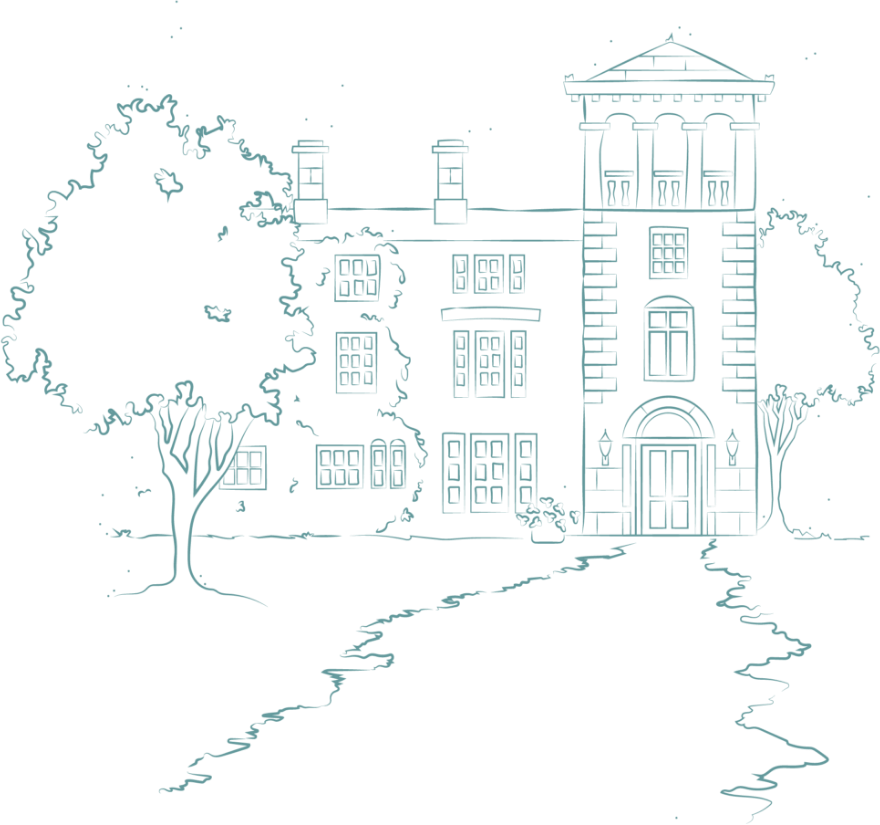
Bricklehampton Hall began life in 1848 as a grand Italianate villa built for the Woodward family, standing in parkland just outside Pershore, Worcestershire. Nearly two centuries later, the same Grade II listed building is home to Bricklehampton Hall Nursing Home, where the elegance of a Victorian country estate now supports modern nursing and residential care. This is the story of how that transformation happened, and what it means for the home Bricklehampton Hall is today.
A village recorded since the Domesday Book
The village of Bricklehampton sits a few miles south east of Pershore, close to Evesham, in the Worcestershire district of Wychavon. Its name has ancient roots, appearing in the Domesday Book of 1086 in the form Bricstelmenstune. It remains a small, quiet place, with a population of only a few hundred, tucked between the River Avon to the north and the slopes of Bredon Hill, an Area of Outstanding Natural Beauty, to the south.
The village’s parish church, St Michael and All Angels, is itself a Grade II listed building with origins in the medieval period, including a 12th century font and doorway that survive despite Victorian rebuilding work in the 1870s. Bricklehampton shares a parish council with the neighbouring villages of Elmley Castle and Netherton, and the wider parish contains twelve listed buildings in total, of which Bricklehampton Hall is by far the largest and best known.
The Woodward family and the building of the Hall
Bricklehampton Hall was built in 1848 for the Woodward family, one of the principal landowning families in the area during the 19th century. Historic records show the family remained closely connected to the village for decades. A memorial inside St Michael and All Angels commemorates Lieutenant C. E. Woodward of Her Majesty’s 98th Regiment, who died at Fort Attock in India in 1859, a reminder of how far the family’s ties extended beyond rural Worcestershire.
The Hall itself was designed as a substantial ashlar stone villa in the Italianate style then fashionable among the English gentry. It is a striking building even today, and its architectural details are precise enough to have earned it Grade II listed status, which it has held since 1972.
The architecture, at a glance
| Feature | Detail |
|---|---|
| Date built | 1848 |
| Style | Large ashlar Italianate villa, two storeys |
| Notable exterior features | A curved central bay of three windows, round headed sashes with dripmoulds and keyblocks, long and short quoins, a slate hipped roof with modillion eaves |
| Tower | A symmetrically placed tower with a pyramid roof, supported on Ionic columns with a balustrade between them |
| Listing status | Grade II listed since 1972 |
| Grounds | Pleasure grounds, a small park, two pools, a walled kitchen garden and a lodge |
The original coach house, to the east of the main building, was later converted into a separate dwelling in the 1970s, a detail that hints at how the wider estate has continued to evolve while the Hall itself has been carefully preserved.
“Our team pride themselves on providing a high standard of care, balancing the warmth and compassion of a family with the passion and integrity you would expect from a care professional.”
Blissful Care Homes
From private residence to nursing home
Ownership of Bricklehampton Hall passed through several hands after the Woodward family’s era, including, by the late 19th century, a Mrs Robert Hinshaw, recorded as the property’s resident in contemporary directories. Like many large country houses in England, the Hall eventually moved away from single-family occupation during the 20th century, and it has since found a new purpose as a nursing and residential care home, one that makes use of its generous grounds and grand proportions to create a setting quite unlike a purpose-built modern facility.
Today, the building’s history is part of what makes it distinctive among care homes in the area. Wide corridors, tall windows and mature gardens are not features you can easily recreate in a new-build home, and for many residents and families, the sense of moving into a genuinely historic house, rather than an institutional building, makes a real difference to how the place feels.
The grounds and setting today
The parkland surrounding Bricklehampton Hall still reflects its 19th century design, with views stretching towards the Bredon Hills. Residents and visitors benefit from mature gardens that have had well over a century to establish themselves, offering a calm, green setting for outdoor time, whether that is a short walk, a quiet sit in the sunshine, or simply looking out from a window.
The village location, roughly midway between Pershore and Evesham, also means the Hall sits within easy reach of Worcestershire’s market towns while remaining genuinely rural, a combination that is increasingly hard to find near larger care settings.
Bricklehampton Hall as a care home today
The building’s role has changed considerably since 1848, but its purpose, in a sense, has not: it remains a place where people live, are cared for, and are part of a household. Bricklehampton Hall now provides nursing and residential care, including support for people living with dementia and a range of physical and long-term health needs, within the same walls that once housed a Victorian family and their staff.
You can see more of what day to day life looks like at the home now, including activities and the wider community, on the Bricklehampton Hall life page, or take a closer look at the building and grounds themselves via the Bricklehampton Hall home overview.
Visiting Bricklehampton Hall
For families curious about the building’s history as well as the care on offer, a visit is the best way to experience both. Seeing the original architectural features alongside the home’s modern facilities gives a much clearer sense of what makes Bricklehampton Hall different from a typical care setting. If you are at an earlier stage and simply exploring what to look for in any care home, our practical guide to choosing the right care home is a helpful companion piece.
Frequently Asked Questions
Is Bricklehampton Hall a listed building?
Yes. Bricklehampton Hall has been Grade II listed since 1972, recognised for its Italianate architecture and the quality of its 1848 design, including features such as its curved central bay of windows and its distinctive tower.
Who originally built Bricklehampton Hall?
The Hall was built in 1848 for the Woodward family, one of the principal landowning families in the village at the time. The family’s connection to the area is still marked by a memorial inside the village church, St Michael and All Angels.
What type of care does Bricklehampton Hall provide today?
Bricklehampton Hall now operates as a nursing and residential care home, supporting people with a range of needs, including dementia care, within the same historic building and grounds that have stood since the 19th century.
A place with history, still writing its next chapter
Few care homes in Worcestershire can trace their story back through more than 175 years of continuous history, from a Regency era family seat to a modern nursing home. That heritage sits alongside everyday life at Bricklehampton Hall, near Pershore, where residents and their families are part of the next chapter for a building that has already seen a great deal of change. To find out more or arrange a visit, please get in touch with our team.